
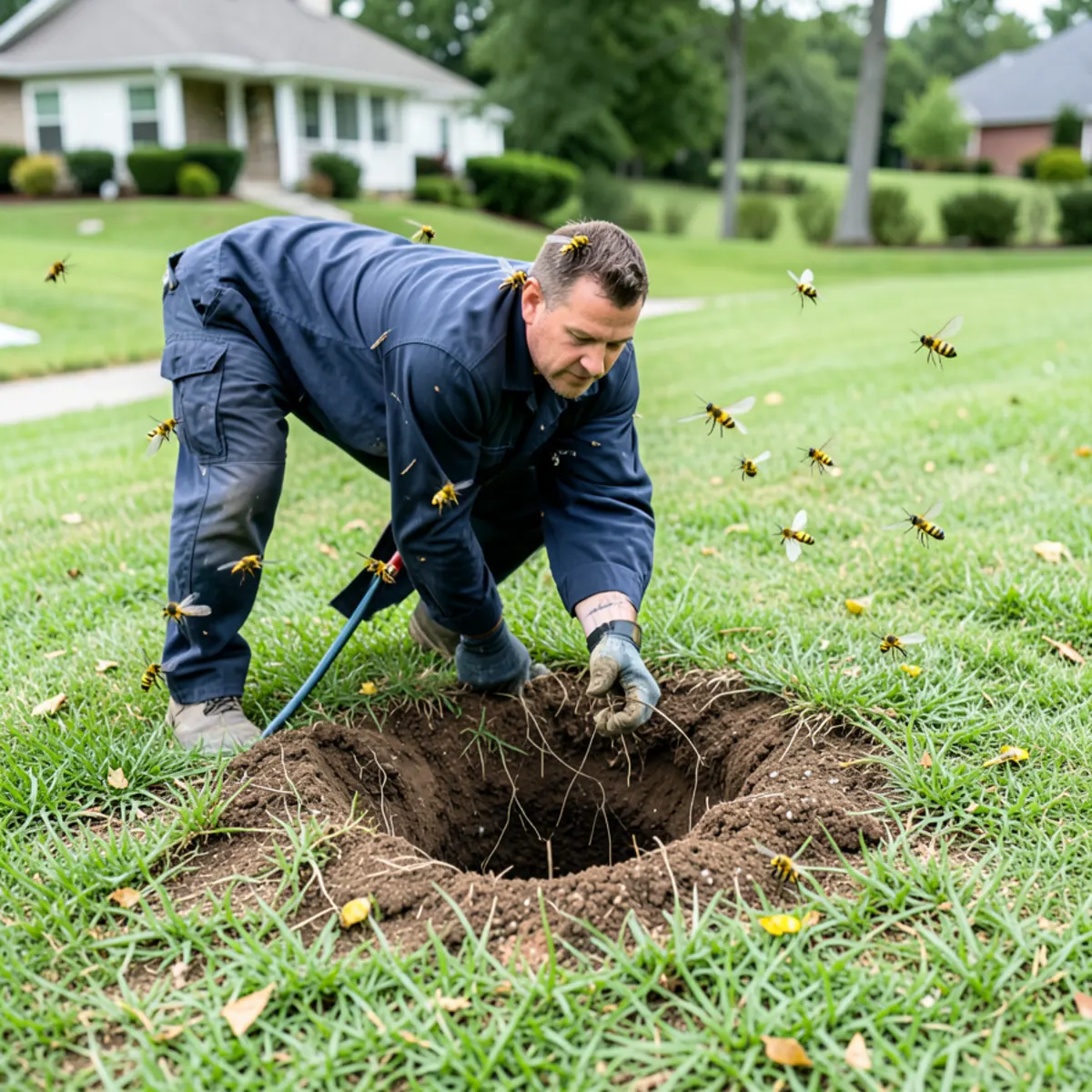
Yellow jacket ground nests in Georgia are hidden underground burrows that house thousands of aggressive stinging wasps in late summer. Never pour gasoline or bleach down the hole—which is dangerous, illegal, and causes environmental damage. Instead, mark the entrance from a safe distance, keep family and pets indoors, and call (321) 496-4080 to have an independent local professional eradicate the nest after dusk using protective bee suits and targeted insecticidal dusts.
- 1.Why Yellow Jackets Nest in the Ground in Conyers
- 2.Why Late-Summer Colonies Become Hyper-Aggressive
- 3.Why Pouring Gasoline or Bleach Down the Hole is Dangerous and Illegal
- 4.Professional Nighttime Elimination and Nest Excavation
- 5.First Aid for Multiple Yellow Jacket Stings
- 6.Entomological Behavior on Ground Nest Vibration Sensitivity
- 7.Frequently Asked Questions
Why Yellow Jackets Nest in the Ground in Conyers
In the Georgia Piedmont, eastern yellow jackets (Vespula maculifrons) and southern yellow jackets (Vespula squamosa) rarely build open paper nests under eaves. Instead, fertilised queens emerge from winter hibernation in spring and seek pre-existing underground cavities:
- Abandoned rodent and mole burrows along lawn margins, fence lines, and pasture edges.
- Hollow tree root cavities left behind after oak or pine stump removals.
- Erosion pockets beneath landscape railroad ties, stone retaining walls, or decorative pine straw beds.
Have an Active Pest Question in Conyers?
Call our direct dispatch line at (321) 496-4080 to speak with an independent local pest contractor serving Rockdale County.
Why Late-Summer Colonies Become Hyper-Aggressive
During spring and early summer, worker yellow jackets hunt caterpillars and insect larvae to feed protein to developing larvae. However, by late August, the queen ceases egg-laying, and the larval population declines. Deprived of the sweet secretion normally produced by larvae, thousands of adult workers become starved for carbohydrates. They scavenge aggressively around trash cans, outdoor dining patios, and fallen fruit trees, reacting violently to vibrations from lawn mowers and weed trimmers.
Why Pouring Gasoline or Bleach Down the Hole is Dangerous and Illegal
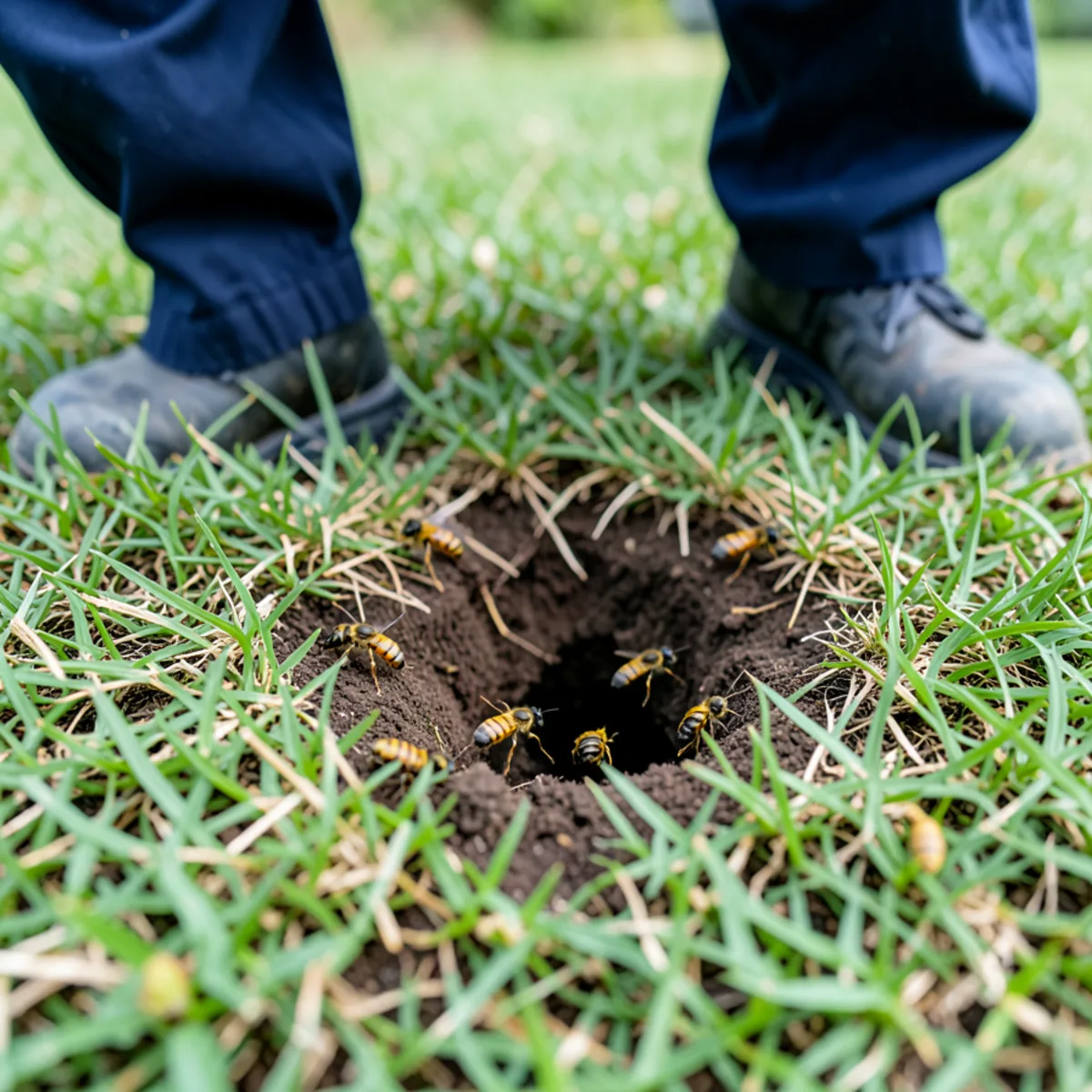
An alarming number of homeowners resort to pouring gasoline or laundry bleach down yellow jacket holes. This practice is extremely hazardous, environmentally destructive, and illegal under Georgia Department of Natural Resources regulations. A single cup of gasoline contaminates thousands of gallons of groundwater in porous Piedmont red clay and poses severe flash-fire burn risks. Moreover, gasoline fumes frequently trigger alarm pheromones, prompting hundreds of enraged yellow jackets to erupt from hidden escape holes and attack the applicator before the nest dies.
Professional Nighttime Elimination and Nest Excavation
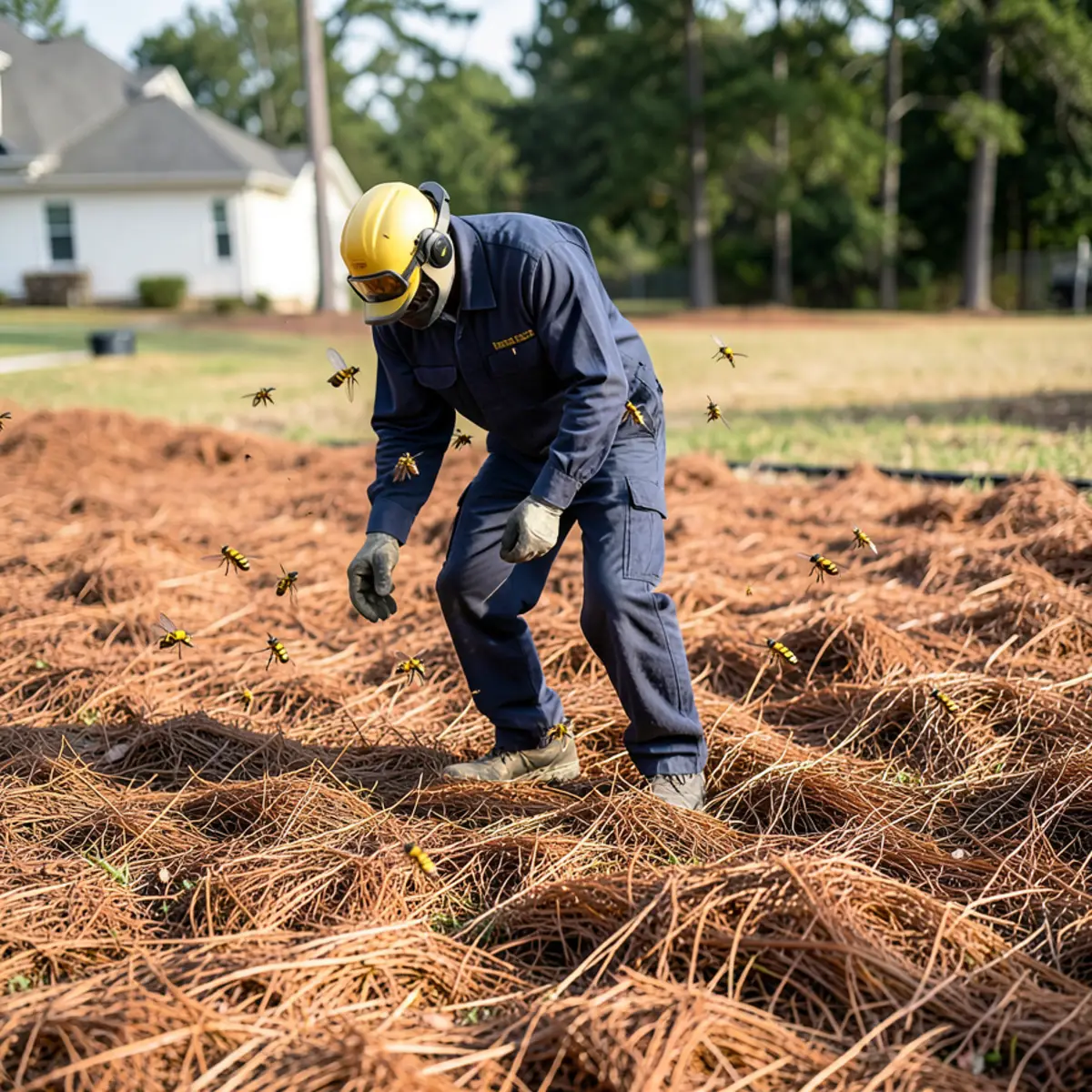
Professional pest control operators treat subterranean yellow jacket nests at night or during twilight hours when the entire colony is inside the burrow and flight activity ceases. Wearing heavy-duty protective bee suits with sealed veil hoods, the technician applies an EPA-registered micro-crystalline insecticidal dust (such as deltamethrin or pyrethrin formulations) directly into the main entrance using a pressurized hand duster. Foraging wasps entering the hole track the dust deep into the underground brood combs, collapsing the nest within 12 to 24 hours. Once activity halts, the burrow entrance is permanently sealed with soil.

First Aid for Multiple Yellow Jacket Stings
Unlike honeybees, yellow jackets possess smooth stingers that do not detach, allowing a single insect to sting repeatedly while injecting venom. If you or a family member are stung:
- Run in a straight line toward shelter: Do not flail your arms or play dead; yellow jackets release alarm pheromones that attract nestmates. Enter a closed vehicle or house immediately.
- Wash the sting sites with soap and cold water, then apply ice packs wrapped in a towel for 15 minutes to reduce localized swelling.
- Monitor for systemic allergic reactions (anaphylaxis): Hives, dizziness, swelling of the throat or tongue, or difficulty breathing require immediate emergency medical care (911) or EpiPen administration.
Subterranean yellow jacket nests are lined with papery pulp that conducts acoustic vibrations efficiently. The vibration of a two-stroke lawn mower engine 15 feet away simulates a predatory burrow invasion, triggering a coordinated defensive swarm of hundreds of guard wasps within seconds.
University of Georgia College of Agricultural & Environmental Sciences / Bulletin 1158
Frequently Asked Questions
It is extremely risky. Many ground nests feature secondary escape holes hidden in nearby pine straw. If you approach with a flashlight—which wasps fly toward—or fail to penetrate deep into the brood comb with store-bought aerosol foam, you risk suffering dozens of severe stings.
Our local guides cite verified state regulatory bodies, university cooperative extension services, and official pest management standards.
- [1]Stinging Insects: Biology and Hazard Management— University of Georgia Extension
- [2]Wasp and Hornet Control Guidelines— Georgia Structural Pest Control Commission