
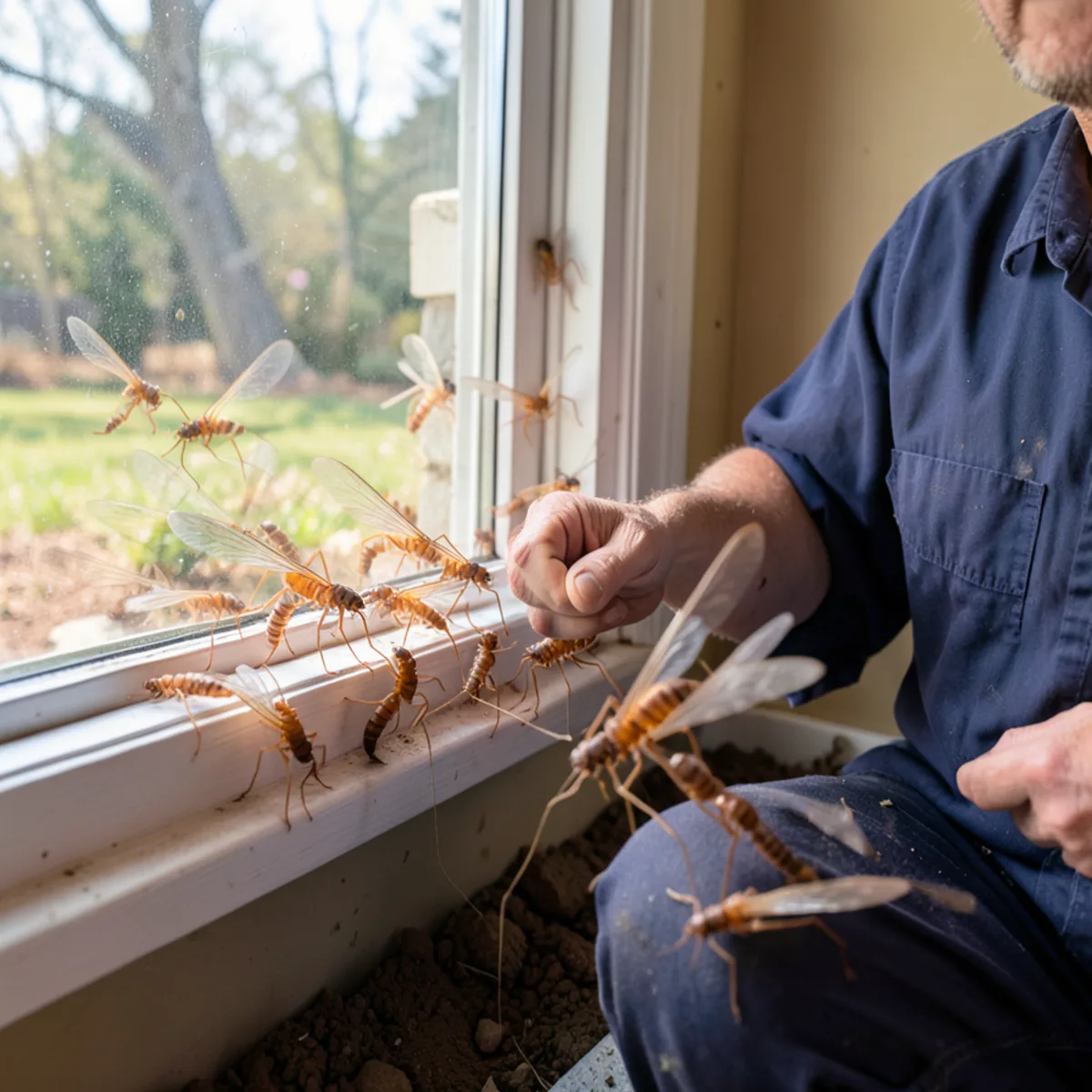
Termite swarmers inside a Conyers home indicate that an established, mature subterranean termite colony is nesting directly beneath or within the home's structural framing. Do not spray them with aerosol bug spray—which causes them to scatter deeper into wall cavities. Instead, vacuum up the swarmers, preserve a few specimens in a sealed bag for species confirmation, and immediately schedule a structural crawl space and foundation inspection by calling (321) 496-4080.
- 1.What Are Termite Swarmers and Why Are They Indoors?
- 2.Termite Swarmers vs. Flying Ants: The 3 Critical Differences
- 3.What NOT to Do When Swarmers Appear
- 4.4 Immediate Action Steps to Take Right Now
- 5.What an Independent Contractor Checks During the Emergency Inspection
- 6.Liquid Soil Barriers vs. In-Ground Bait Systems Following a Swarm
- 7.Entomological Insight on Subterranean Swarm Timing
- 8.Frequently Asked Questions
What Are Termite Swarmers and Why Are They Indoors?
Termite swarmers, scientifically referred to as 'alates', are the winged reproductive caste of a subterranean termite colony. A colony typically takes three to five years to reach maturity before it begins producing swarmers. In the Georgia Piedmont region, swarms are triggered by warm, sunny mornings immediately following spring rainfall between late March and early May. When swarmers emerge inside a house rather than outside in the yard, it confirms that termites have already found an entry pathway through foundation expansion joints, plumbing penetrations, or crawl space sill plates.
Have an Active Pest Question in Conyers?
Call our direct dispatch line at (321) 496-4080 to speak with an independent local pest contractor serving Rockdale County.
Termite Swarmers vs. Flying Ants: The 3 Critical Differences
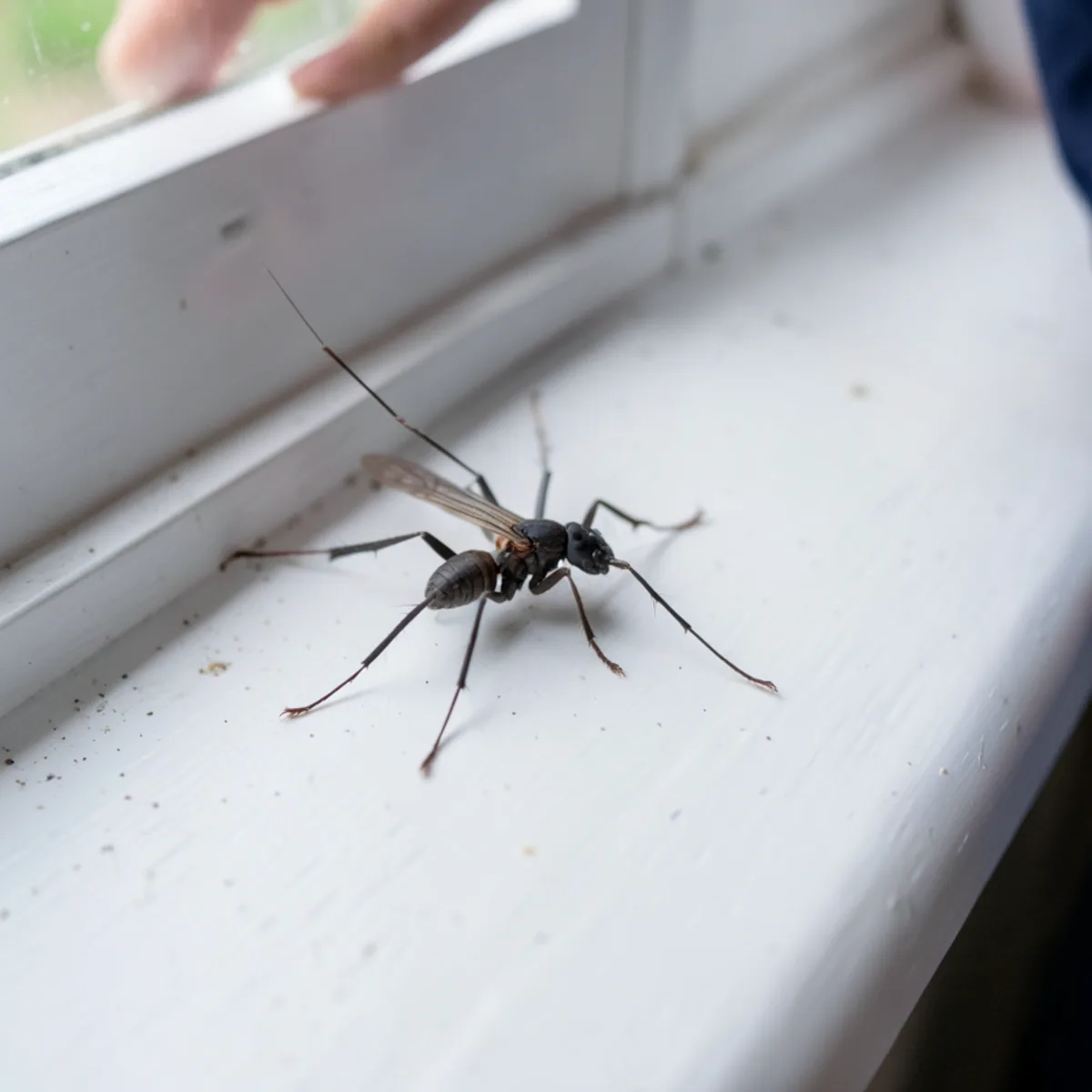
Homeowners frequently mistake harmless reproductive flying ants for destructive subterranean termites. You can quickly differentiate between the two by examining three distinct anatomical features under good lighting:
| Anatomical Feature | Subterranean Termite Swarmer | Flying Carpenter / Moisture Ant |
|---|---|---|
| Waistline | Broad, uniform waist with no pinched constriction | Pinched, narrow waist like a wasp (pedicel) |
| Antennae | Straight, flexible, composed of bead-like segments | Elbowed with a distinct sharp 90-degree bend |
| Wings | Two pairs of equal length, milky translucent, twice body length | Front wings noticeably larger than smaller hind wings |
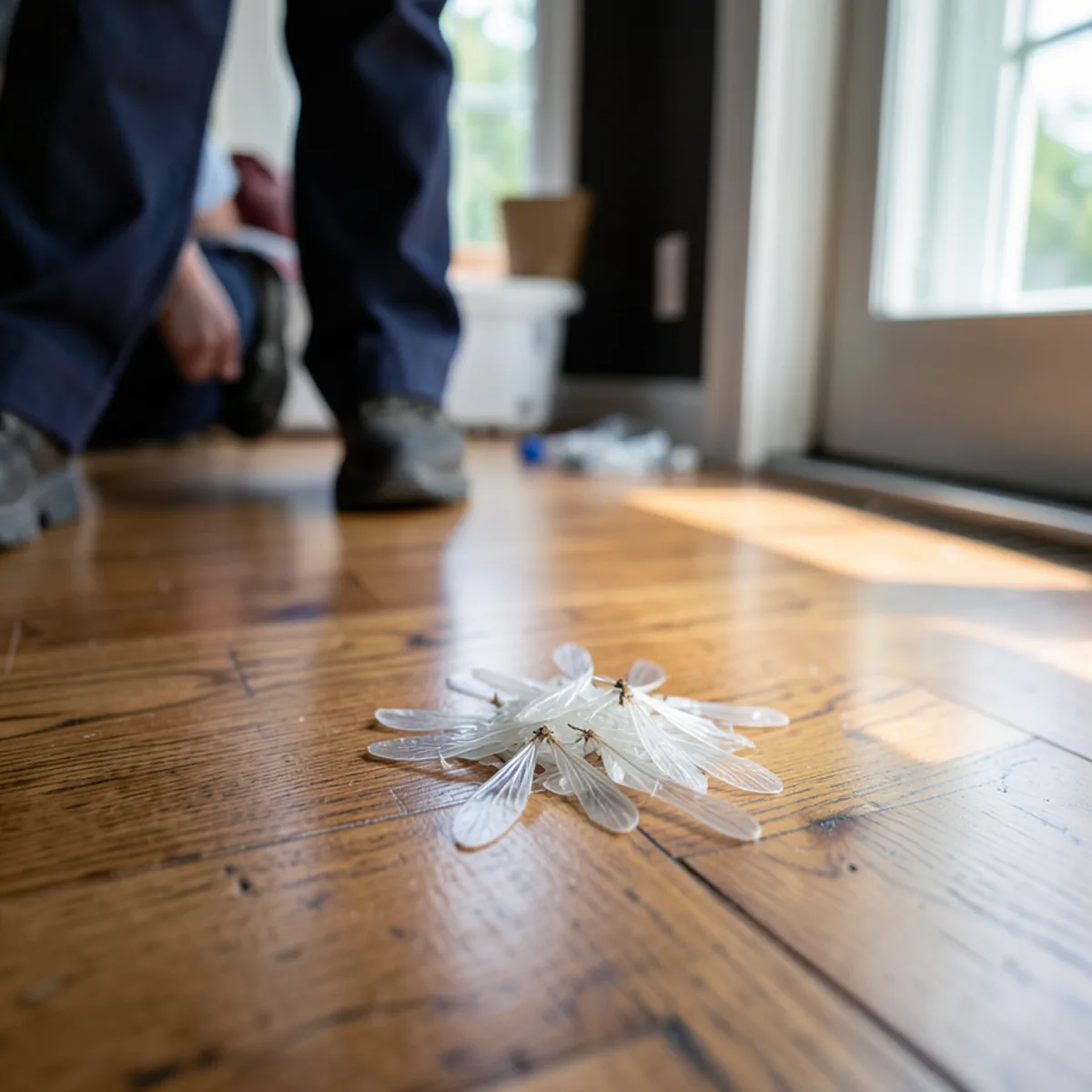
| Wing Durability | Wings shed very easily, leaving piles on window sills | Wings firmly attached, rarely shed during flights |
| Color | Solid dark brown to coal black body | Reddish-brown, black, or multi-toned body |
What NOT to Do When Swarmers Appear
In the panic of seeing hundreds of insects emerge, homeowners often make costly mistakes that complicate professional remediation:
- Do NOT spray aerosol insecticide or bug bombs into the exit holes. This does not kill the underground queen and triggers a panic response that causes worker termites to open new feeding pathways elsewhere in your framing.
- Do NOT break open drywall or rip away baseboards in an attempt to find the colony. Disturbing active mud tubes causes termites to seal off the damaged area and reroute into hidden subflooring.
- Do NOT throw away all the dead insects before the technician arrives. Having physical specimens allows the responding professional to confirm the exact species immediately.
4 Immediate Action Steps to Take Right Now
Follow these practical, calm steps immediately after witnessing a swarm indoors:
- Vacuum up the visible swarmers using a vacuum hose attachment. Empty the canister or vacuum bag into an exterior trash can.
- Save 5 to 10 dead swarmers in a clear ziplock bag or taped to an index card for your technician to inspect.
- Identify the exact emergence point—usually a baseboard crack, an electrical outlet faceplate, a window casing, or a plumbing collar under a sink.
- Call (321) 496-4080 to connect with an independent local structural pest specialist who can inspect your crawl space and provide a written treatment estimate.
What an Independent Contractor Checks During the Emergency Inspection
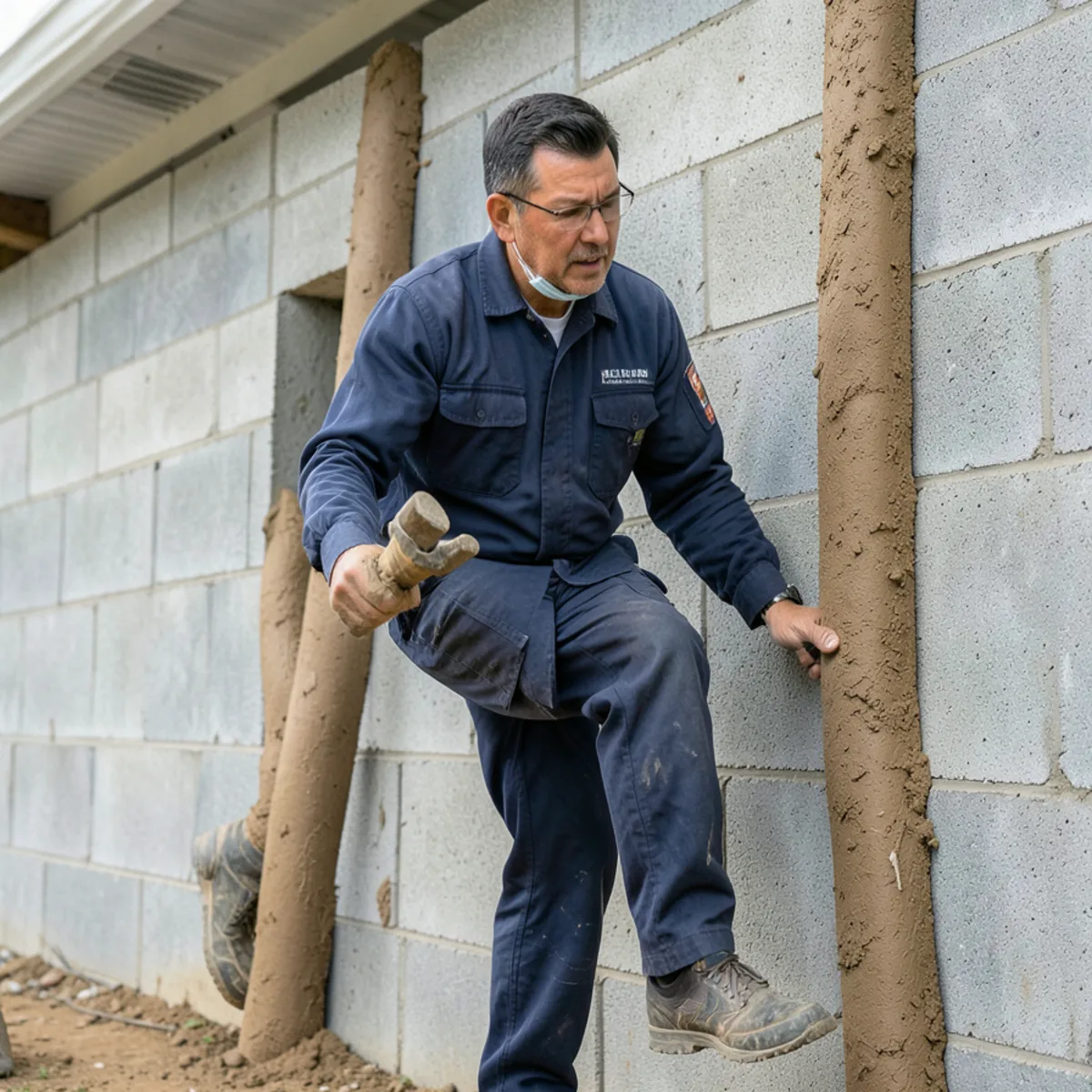
When a qualified contractor arrives at your Conyers property, their focus extends far beyond the room where swarmers emerged. Subterranean termites nest underground and construct microscopic tunnels through masonry voids. The technician performs a structured inspection covering: (1) Sounding wooden sill plates and floor joists inside the crawl space with an inspection probe; (2) Examining interior masonry piers and foundation stem walls for active earthen shelter tubes; (3) Testing moisture levels in band joists using a digital moisture meter, as termites gravitate to timbers with moisture content above 18%; (4) Checking exterior brick weep holes, foundation expansion joints, and attached slab interfaces; and (5) Inspecting exterior earth-to-wood contact points such as deck footings, porch steps, and mulch beds.
Liquid Soil Barriers vs. In-Ground Bait Systems Following a Swarm
Following inspection, homeowners must choose an appropriate long-term treatment strategy. A non-repellent liquid soil barrier (such as Termidor / Fipronil) involves digging a continuous 6-inch trench around foundation perimeters and rodding termiticide into the clay subsoil. Foraging worker termites unknowingly pass through the treated zone and transfer the active ingredient back to the nest through social grooming, eliminating the entire colony within 90 days. Alternatively, in-ground bait systems involve installing monitoring stations flush with turf every 10 to 15 feet around the home. Worker termites feed on cellulose cartridges treated with insect growth regulators that prevent molting. While bait stations eliminate trenching and drilling attached concrete patios, they require scheduled monitoring visits to ensure continuous bait consumption.
Subterranean termite swarmers themselves have fragile bodies, lack biting mouthparts, and cannot consume wood. They do not cause direct structural damage; their sole biological function is to mate and find damp soil to start a new colony. However, because swarmers are weak fliers that travel less than 100 feet from their parent nest, indoor swarmers are definitive proof of an active, wood-consuming worker colony directly beneath your floorboards.
University of Georgia Extension Bulletin 1069 / Georgia Structural Pest Control Commission
Frequently Asked Questions
No. Subterranean termite swarmers require direct contact with damp, moist soil to survive and raise their first brood of larvae. Swarmers trapped indoors on carpets, drywall, or furniture will dehydrate and die within a few hours if they cannot access soil.
Our local guides cite verified state regulatory bodies, university cooperative extension services, and official pest management standards.
- [1]Subterranean Termites: Biology and Control— University of Georgia Cooperative Extension Bulletin 1069
- [2]Rules of the Georgia Structural Pest Control Commission— Georgia Department of Agriculture