

Over-the-counter supermarket bug sprays fail against German cockroaches because they contain repellent pyrethroids that scatter the colony into wall cavities and adjoining apartments while failing to kill hidden egg capsules. Eradication requires non-repellent insecticidal gel baits and Insect Growth Regulators (IGRs) that exploit roach feeding behaviors to collapse the entire breeding population.
- 1.The Biology of the Super-Pest: Blattella germanica
- 2.Why Aerosol Cans and Foggers Make Infestations Worse
- 3.The Professional Solution: Gel Baits and IGRs
- 4.Shared Plumbing Chases and Multi-Unit Migration Dynamics
- 5.Essential Resident Sanitation and Moisture Elimination Protocol
- 6.The 3-Phase Professional Clean-Out Protocol: Flush, IGR Disruption, and Bait Rotation
- 7.Entomological Mechanism of Horizontal Transfer (Cascade Effect)
- 8.Frequently Asked Questions
The Biology of the Super-Pest: Blattella germanica
German cockroaches are biologically distinct from outdoor American 'palmetto bugs.' Understanding their reproductive speed explains why store sprays cannot keep up:
- Prolific reproduction: A single female German cockroach carries an egg purse (ootheca) containing 30 to 48 eggs, producing up to 300 offspring in her short lifespan.
- Rapid maturation: Newly hatched nymphs mature into breeding adults in just 36 to 60 days under warm indoor kitchen conditions.
- Widespread insecticide resistance: Decades of over-the-counter pesticide use have produced genetic resistance to common pyrethroid sprays.
- Thigmotactic behavior: They spend 80% of their life squeezed into narrow cracks 1/16-inch wide inside motor housings, cabinet hinges, and wall voids.
Have an Active Pest Question in Conyers?
Call our direct dispatch line at (321) 496-4080 to speak with an independent local pest contractor serving Rockdale County.
Why Aerosol Cans and Foggers Make Infestations Worse
When you spray an aerosol can at a kitchen counter, you kill the few visible foraging roaches on contact. However, the airborne chemical residue acts as a powerful repellent. The hundreds of roaches hidden inside the refrigerator compressor, microwave casing, and wall voids detect the chemical, panic, and flee deeper into walls, spreading the infestation into bathrooms, bedrooms, and neighboring apartment units.
The Professional Solution: Gel Baits and IGRs
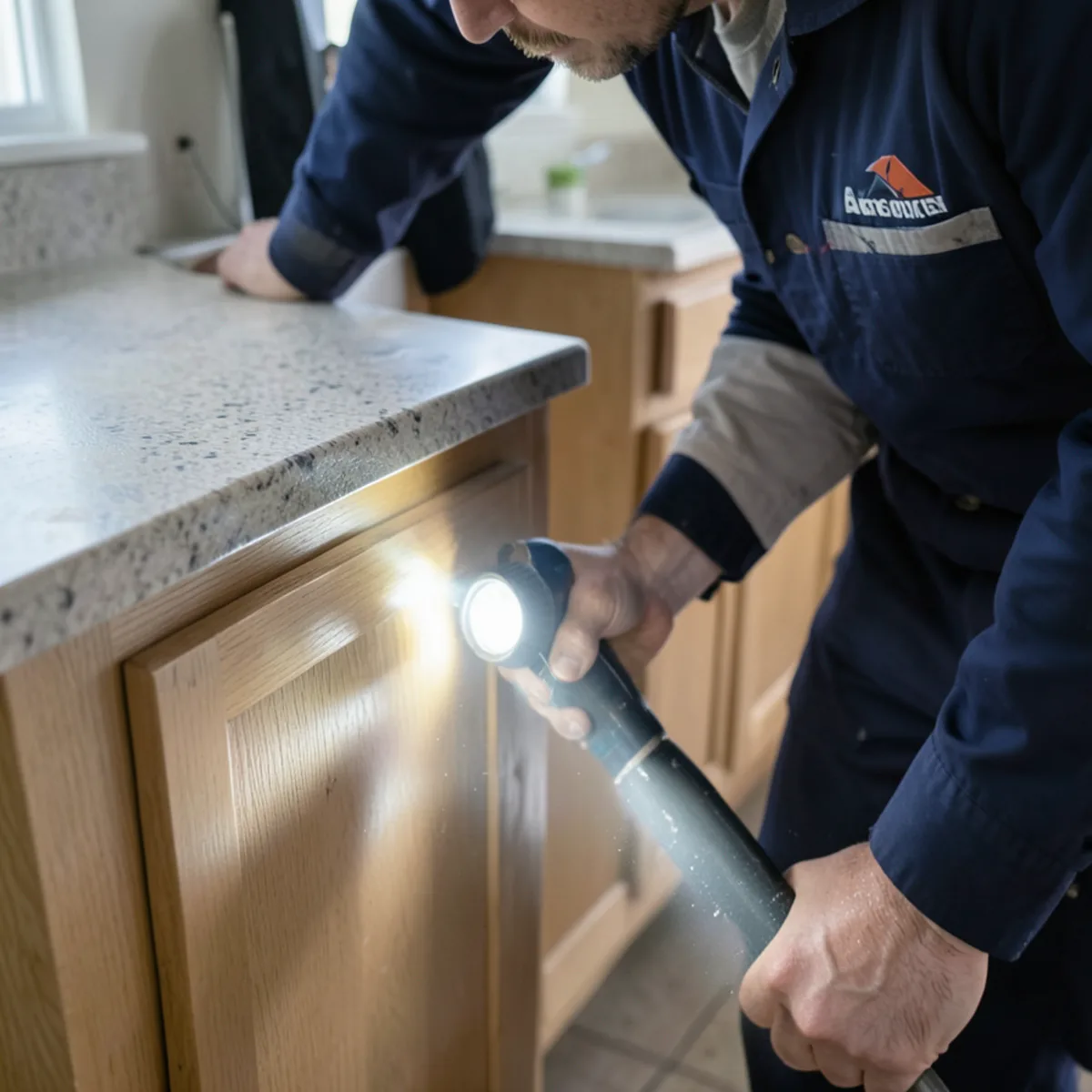
Professional pest contractors solve German roach problems using a two-pronged scientific approach:
- Non-repellent gel baits: Placed in pea-sized dots in cabinet hinges, behind appliances, and around pipe collars. Foraging roaches eat the bait, return to the harbor, and die. Because roaches are cannibalistic and consume feces (coprophagy), secondary poisoning wipes out hidden nymphs.
- Insect Growth Regulators (IGRs): Biochemical compounds that mimic juvenile hormones, preventing nymphs from molting into breeding adults and sterilizing adult females.
Shared Plumbing Chases and Multi-Unit Migration Dynamics
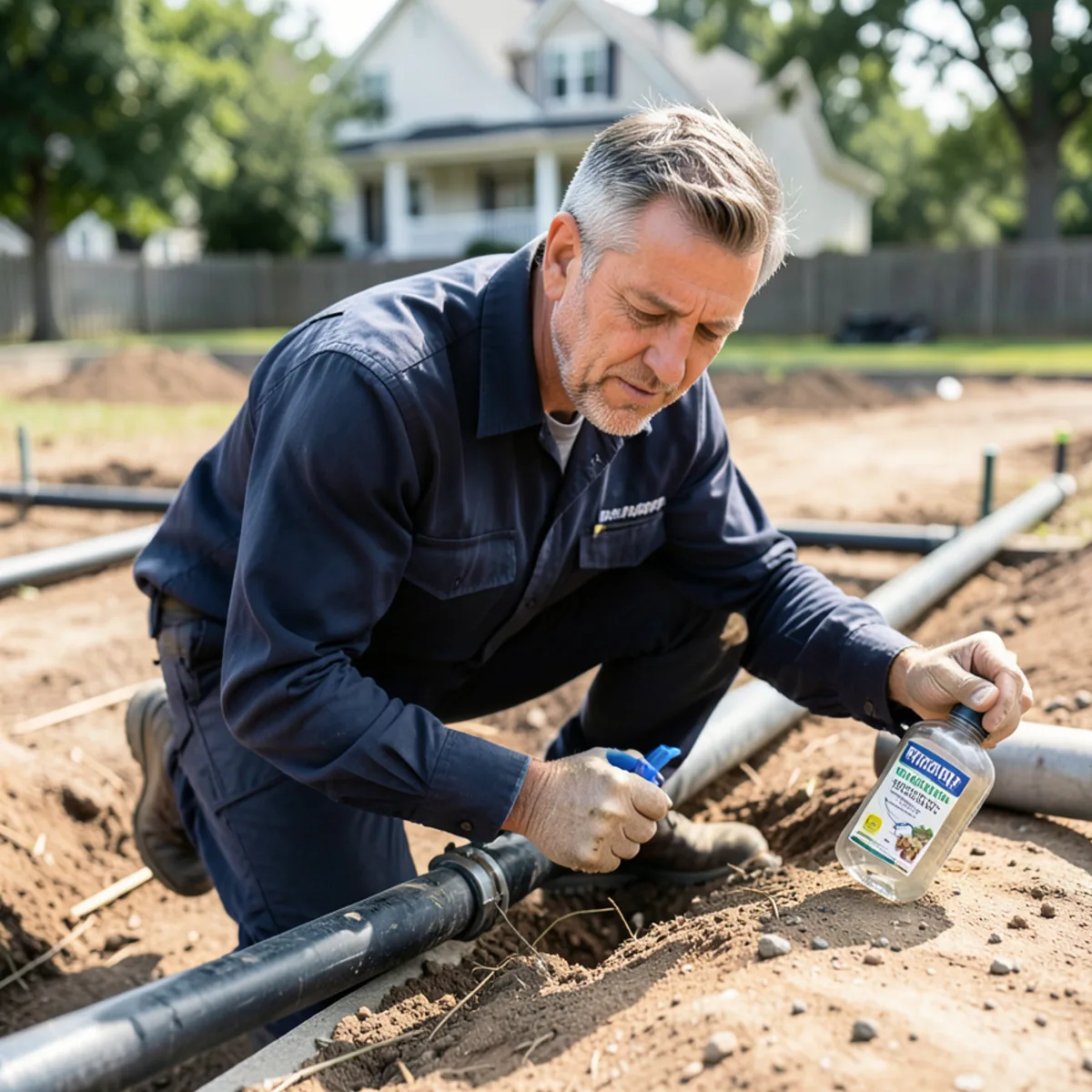
In apartment communities and townhome developments along the I-20 corridor, German cockroaches frequently migrate between units through shared structural chases. Water supply pipes, drain stacks, and electrical conduits pass through hollow party walls with unsealed sheetrock cutouts. If a neighboring tenant sprays grocery-store aerosol foggers, roaches scurry through these wall voids into adjoining kitchens. Effective control in multi-unit buildings requires sealing utility pipe collars with copper mesh and coordinating synchronized bait inspections across adjacent units.
Essential Resident Sanitation and Moisture Elimination Protocol
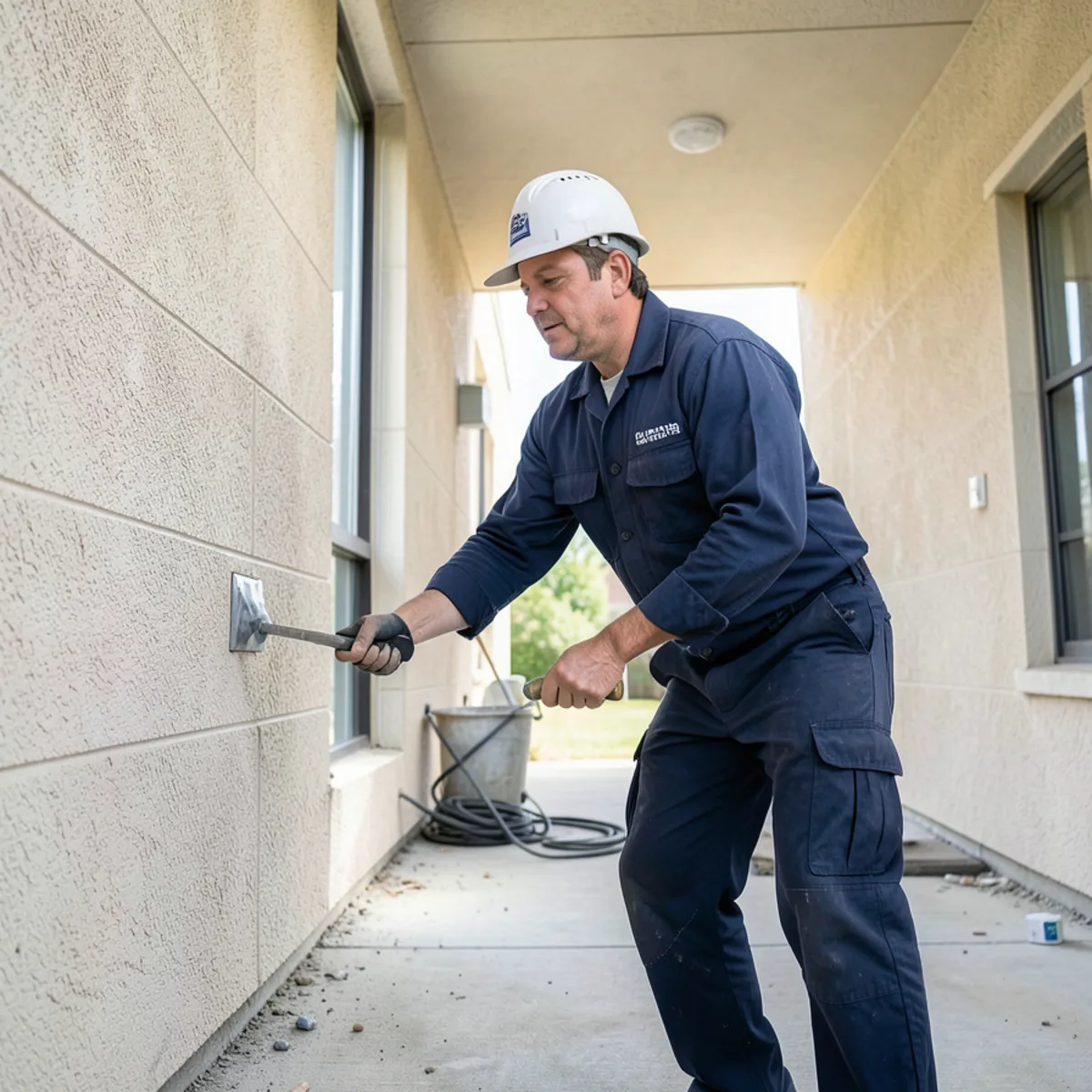
Professional gel baits and growth regulators work most effectively when they do not have to compete with household food grease. Tenants and homeowners can dramatically accelerate cockroach eradication by executing four strict sanitation habits: (1) Degrease stovetops, toaster oven trays, and microwave interiors nightly; (2) Store all pantry dry goods, pet kibble, and cereal inside sealed airtight glass or hard plastic containers; (3) Eliminate nighttime moisture by wiping down kitchen sink basins and fixing dripping P-traps; and (4) Discard all corrugated cardboard delivery boxes immediately upon arrival, as roaches feed on cardboard glue and lay egg cases inside the corrugated fluting.
The 3-Phase Professional Clean-Out Protocol: Flush, IGR Disruption, and Bait Rotation
Comprehensive German roach eradication is a systematic process requiring structured phases. Phase 1 (Initial Inspection & Clean-Out) involves vacuuming visible aggregations with HEPA equipment and placing non-repellent baits deep in appliance voids. Phase 2 (Reproductive Disruption) introduces insect growth regulators to sterilize maturing nymphs. Phase 3 (14-Day Monitoring & Secondary Rotation) inspects sticky monitor cards and applies a chemically distinct bait matrix (rotating between indoxacarb, dinotefuran, or fipronil) to overcome behavioral bait aversion and eliminate late-hatching nymphs.
German cockroaches exhibit strong coprophagy (feces feeding) and necrophagy (carcass feeding). When a single foraging roach ingests a professional bait matrix and dies inside the aggregation harbor, up to 40 hidden nymphs and brooding females consume the carcass and droppings, dying from the transferred active ingredient.
Purdue University Urban Entomology / Journal of Economic Entomology
Frequently Asked Questions
Complete eradication typically requires 3 to 5 weeks and at least two structured professional visits. The initial treatment knocks down the active breeding population, and the follow-up visit (timed 14 to 21 days later) targets newly hatched nymphs before they reach maturity.
Our local guides cite verified state regulatory bodies, university cooperative extension services, and official pest management standards.
- [1]German Cockroach Biology and Control— University of Georgia Cooperative Extension
- [2]Managing Cockroaches in Multi-Family Housing— National Center for Healthy Housing